

News Summary
Residents of Asheville are uniting to protect their cherished urban forest from potential development related to UNC Asheville. With the community expressing concerns over recent construction signs and tree removal, over 5,000 signatures have been gathered on a petition to preserve the area. While some argue for its development to assist the struggling university’s finances, many citizens demand transparency and community involvement in the decision-making process.
Asheville Residents Rally for Urban Forest Preservation Amid University Development Plans
In the vibrant city of Asheville, a spirited discussion is heating up regarding UNC Asheville’s urban forest, which some residents fear might be sacrificed for development. A significant wave of support has emerged from the community, with many writers expressing their thoughts in local letters to the editor. Their primary message? They want to protect the beloved urban forest that adds charm and ecological value to the area.
The Case for Conservation
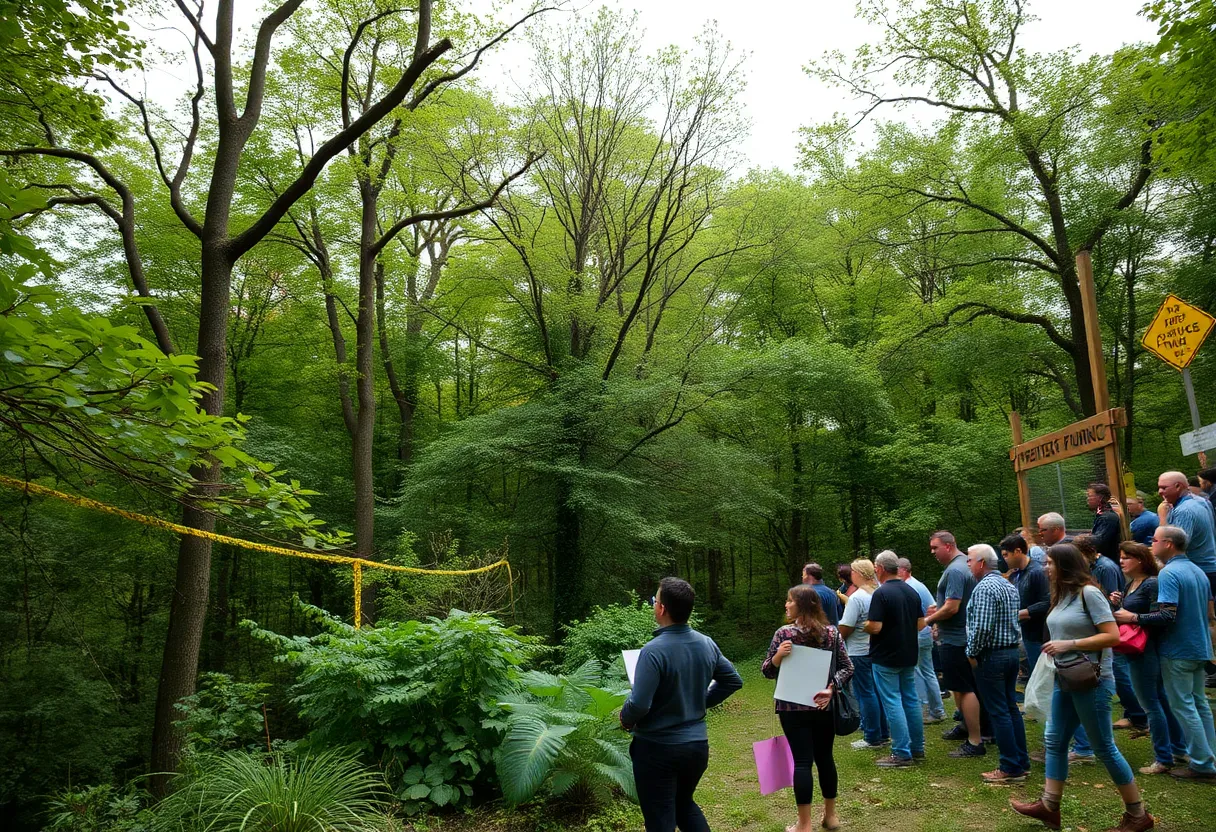
The vocal support for preserving the land stems from growing concerns about recent activities in and around the forest area. Residents have reported sightings of construction signs, survey flags, and even instances of tree removal. Community members argue that this urban forest is not just a patch of greenery but a vital habitat for local wildlife, a recreational space for families, and a critical research site for UNCA professors. With over 5,000 signatures on a petition organized by the Friends of UNCA Woods and a Facebook group boasting around 2,400 members, it’s clear that many in Asheville feel deeply about keeping the forest intact.
Financial Pressures on UNC Asheville
On the flip side, Richard Boyum, a retiree and former educator, advocates for the use of this land to help UNC Asheville tackle its pressing financial woes. The university, often described as “cash poor and land rich,” is facing significant economic challenges. With its current enrollment hovering below 3,000 degree-seeking students, a stark contrast to its counterparts like Western Carolina University and Appalachian State, UNCA is under pressure. These larger universities boast enrollments over 11,000 and 20,000 students respectively, and larger endowments, with Western Carolina at $130 million and Appalachian State surpassing $190 million.
The financial landscape is tough for smaller institutions like UNCA, especially as they struggle to offer a diverse array of programs to meet student needs. Operating at a deficit, the university has had to cut back on academic programs and staffing, putting its future at risk. The anticipated cuts in federal funding under the current administration further exacerbate this dilemma, prompting the university to consider the possibilities of generating income from its land holdings.
Community Conversations and Future Plans
To address growing community concerns and intentions, UNCA’s Director of University Communication, Brian Hart, has mentioned that the university is conducting a thorough evaluation of the property. The assessment aims to better understand land characteristics. In light of this, the university plans to host listening sessions where community members can voice their thoughts and learn more about potential plans for the future.
A recent general information meeting was held on January 28, 2025, where residents gathered to discuss the ongoing situation regarding the forest. With the buzz of activism in the air, the community is eager for transparency and collaboration with the university. Many local residents are concerned about the administration’s intentions and want to ensure that any development respects the ecological and recreational value of the urban forest.
A Focal Point for Future Conversations
In the end, the fate of UNC Asheville’s urban forest is shaping up to be a pivotal topic for the university and the community. As the university looks for innovative, sustainable sources of revenue to thrive in a competitive educational landscape, the community rallies to remind decision-makers of the importance of their natural surroundings. It’s an ongoing dialogue filled with passion and commitment, with both sides presenting compelling arguments about the future of the beloved forest. The developments in Asheville serve as a reminder of the delicate balance that must be maintained when progress calls for change.
Deeper Dive: News & Info About This Topic
HERE Resources
Asheville’s Insect Ecosystem Faces Post-Hurricane Changes
Wildfires Cause Havoc in Western North Carolina
Asheville Faces Uncertainty with Cuts to Environmental Research
Buncombe County Community Rallies for Missing Individuals After Hurricane Helene
UNC Asheville Achieves Prestigious Research Classification
Asheville Businesses Invited to Participate in Impact Survey After Hurricane Helene
Asheville Faces Tough Times After Hurricane Helene’s Flooding
Asheville Prepares for ‘Voices of Impact’ Event
Asheville Reopens Swannanoa River Road After Hurricane Helene
Asheville Residents Unite Against UNC Asheville’s Urban Forest Plans
Additional Resources
- Wild Roots at Sly Grog Lounge
- WLOS: UNC Asheville’s Forest Assessment
- Daily Kos: Asheville Open Thread
- AVL Today: 10 Tree-Mendous Facts
- AP News: Hurricane Helene and Asheville Flooding
- Wikipedia: Urban Forest


Author: STAFF HERE ASHEVILLE WRITER
The ASHEVILLE STAFF WRITER represents the experienced team at HEREAsheville.com, your go-to source for actionable local news and information in Asheville, Buncombe County, and beyond. Specializing in "news you can use," we cover essential topics like product reviews for personal and business needs, local business directories, politics, real estate trends, neighborhood insights, and state news affecting the area—with deep expertise drawn from years of dedicated reporting and strong community input, including local press releases and business updates. We deliver top reporting on high-value events such as the Asheville Bread Festival, LEAF Festival, and mountain sports tournaments at Biltmore Estate. Our coverage extends to key organizations like the Asheville Area Chamber of Commerce and Explore Asheville Convention & Visitors Bureau, plus leading businesses in hospitality and brewing that power the local economy such as the Biltmore Estate and Sierra Nevada Brewing Company. As part of the broader HERE network, including HERECharlotte.com, HEREGreensboro.com, HERERaleigh.com, and HEREOBX.com, we provide comprehensive, credible insights into North Carolina's dynamic landscape.