

Asheville, October 27, 2025
News Summary
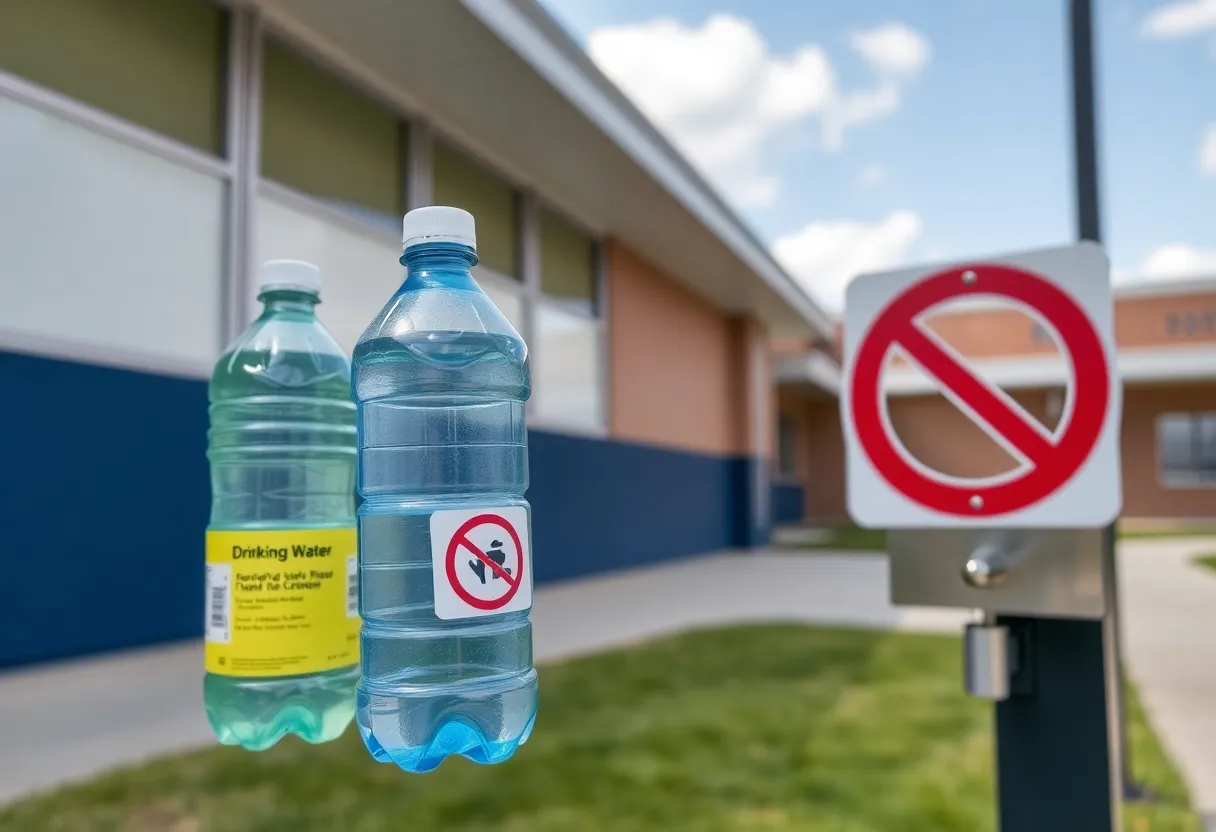
Lead levels have been detected in the water supply at several schools in Asheville, raising serious concerns for student safety following Hurricane Helene. Testing revealed lead presence in seven public schools and one private institution. Although no students consumed the contaminated water, bottled water is being provided and measures such as disabling water fountains and installing NSF-certified filters are being implemented. Health experts recommend lead testing for pregnant women and children under six who may have been exposed.
Asheville – Lead levels have been detected in water at several schools in the Asheville area, raising concerns about the safety of drinking water for students following Hurricane Helene. During a briefing on November 14, Clay Chandler from Buncombe County Water Resources reported that an investigative sampling program revealed lead presence at seven schools in Asheville City and Buncombe County, as well as one private school, Odyssey Community School. The results of the testing, which was conducted from October 17 to October 24, were updated in real-time on the water services recovery website.
Schools affected by lead detection include:
- Lead-detecting schools in Buncombe County:
- Oakley Elementary School
- Sand Hill Elementary School
- Charles C. Bell Elementary School
- Glen Arden Elementary School
- Lead-detecting schools in Asheville City:
- Lucy Herring Elementary School
- Hall-Fletcher Elementary School
No students have consumed tap water at any of the affected schools, and as a precaution, bottled water is being provided. The schools are also disabling water fountains and taking measures to comply with EPA guidance by installing NSF-certified filters to reduce lead levels. Additionally, plumbing and fixtures that may increase lead exposure, especially those installed before 1988, should be replaced. The water treatment protocols recommend flushing any water being boiled for use for 30-120 seconds before use.
Health experts emphasize that even low levels of lead exposure can negatively impact children’s health, potentially causing brain and nervous system damage, delayed growth, learning difficulties, and hearing/speech problems. The CDC recommends that pregnant or breastfeeding individuals, as well as children under six who may have consumed the affected water, seek lead testing.
To support residents concerned about their health, the Buncombe County Health Department has established a Blood Lead Information Line for inquiries. Additionally, residents can access free lead testing by contacting Buncombe County Water Resources. Future resampling of the affected schools and residences will take place at one month, three months, and six months after corrections to water treatment have been made.
During the initial sampling period, 159 samples were collected, with nine showing detectable lead levels. Of these, three exceeded the action level of 0.015 parts per million. Remarkably, flushing the water for 30 seconds after it had sat in pipes for six hours resulted in zero detectable lead levels in the samples. Water samples from the North Fork Water Treatment Plant showed no lead or copper levels prior to treatment, which began in July 2024. In response to high demand, Asheville Water is collaborating with local agencies to increase access to testing kits.
Citizens are encouraged to frequently check for updates regarding the lead situation in water and the protective measures in place at local schools.
Frequently Asked Questions
What was detected in the water at Asheville-area schools?
Lead levels were detected in water at several area elementary schools.
What schools are affected by lead detection?
- Oakley Elementary School
- Sand Hill Elementary School
- Charles C. Bell Elementary School
- Glen Arden Elementary School
- Lucy Herring Elementary School
- Hall-Fletcher Elementary School
- Odyssey Community School (private institution)
What measures are being taken to ensure student safety?
Bottled water is being provided, water fountains are being disabled, and NSF-certified filters are being installed to reduce lead levels.
What guidelines are being recommended for water usage?
A flushing protocol is recommended for any water being boiled for use, advised to run for 30-120 seconds before use.
Who should seek lead testing?
Pregnant or breastfeeding individuals and children under six who may have consumed the affected water are encouraged to seek lead testing.
Key Features of the Lead Detection Issue
| Feature | Details |
|---|---|
| Detection Period | October 17 to October 24 |
| Results Availability | Updated in real time on water services recovery website |
| Sample Count | 159 samples collected |
| Schools with Detected Lead | 7 Public Schools, 1 Private School |
| Action Level Exceeded | 3 samples exceeded 0.015 parts per million |
| Flushing Protocol Result | Zero detectable lead levels post-flushing |
| Testing Accessibility | Free testing available |
Deeper Dive: News & Info About This Topic
HERE Resources
Political Violence Escalates After Assassination of Activist
Political Violence Escalates: A Growing Concern in America
Government Shutdown Impacts Tourism in Asheville Area
Nurses Rally at Mission Hospital Over Staffing Shortages
Massive Crowd Anticipated for Memorial in Glendale
Asheville to Host Public Events for Local Startups and Arts
Communities in Western North Carolina Honor 9/11 Victims
Asheville City Council Proposes Reduced Speed Limits
North Carolina Public Schools Show Improvement In Proficiency Rates
Asheville, North Carolina Faces Record Flooding After Hurricane Helene
Additional Resources
- AOL News
- WLOS News
- 828 News Now
- Google Search: Asheville lead water testing
- Wikipedia: Lead poisoning