

Asheville, July 23, 2025
News Summary
As Asheville grapples with rapid urban development, its urban forests, covering 44% of the city, face significant threats. The loss of tree canopy negatively impacts environmental sustainability, air quality, and community health. Citizens and groups like ‘Save the Woods’ are advocating for the protection and restoration of these vital green spaces. With urban forests absorbing 2,000 tons of carbon annually, their preservation is crucial for the city’s ecological balance and quality of life.
Asheville’s Urban Forests: Crucial for Sustainability Amid Growing Development Pressures
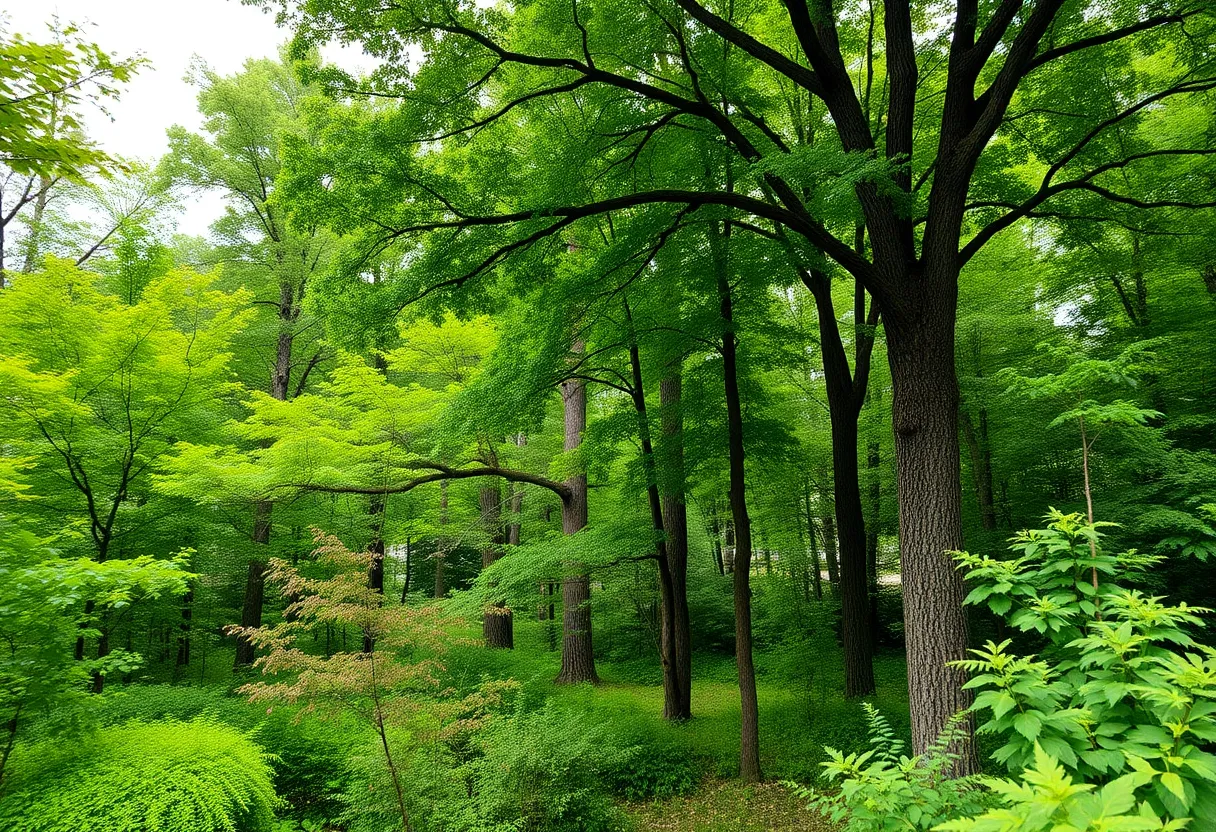
Asheville’s urban forests, which encompass approximately 44% of the city, are facing significant threats from rapid development and urbanization. These vital green spaces not only contribute to the city’s scenic landscape but also play a critical role in environmental sustainability by absorbing nearly 2,000 tons of carbon each year.
The ongoing loss of tree canopy within Asheville—a decline of 6.4% over the past decade—amounts to around 891 acres, equivalent to the size of approximately 675 football fields. This reduction negatively impacts essential ecosystem services such as stormwater management, carbon storage, and air purification, compromising both environmental health and community well-being.
The urban forests of Asheville are not just essential for the ecosystem; they also help in reducing urban heat effects, improving air quality, and attracting eco-tourism. Neighborhoods boasting tree cover can lower local temperatures by up to 5°F, leading to reduced energy costs and decreased heat stress during hot months. Furthermore, urban trees act as natural air filters, removing harmful pollutants, benefiting respiratory health for all residents.
Challenges to Urban Forests
The tremendous growth in Asheville is threatening its urban forests as climate-related stressors, invasive species, pests, and a general expansion of development continue to pose risks. Citizens, local leaders, and environmental groups are increasingly concerned about these issues, particularly the need to protect existing trees and restore lost canopy.
The grassroots movement known as “Save the Woods” has emerged as a significant advocate for urban forest protection and restoration. Alongside other groups like Friends of the Woods, which safeguards the 45-acre urban forest at the UNC Asheville campus, Asheville GreenWorks is leading various initiatives that include replanting native species and educating the public about the importance of urban forests.
Significance of Urban Forests
Urban forests also play a pivotal role in managing stormwater, contributing to improved watershed health by managing millions of gallons. Areas enriched with tree cover report fewer heat-related illnesses, a greater likelihood of higher property values—ranging from 3% to 15%—and stronger community ties, as urban greening is closely linked to increased physical activity and mental health.
Moreover, these green spaces provide essential habitats for local wildlife, contributing to biodiversity despite the demands of urban development. Preservation of ecosystems, particularly in areas like the UNC Asheville campus, is vital for maintaining ecological functions in tandem with urban expansion.
Future of Asheville’s Urban Forests
Asheville’s city planning must prioritize sustainability through the management and expansion of urban forests to ensure their longevity. The Urban Forestry Commission is tasked with regulating tree planting and protection, emphasizing the importance of native species in the restoration process.
Local communities are encouraged to engage in tree planting activities, join advocacy groups, and participate in public discussions aimed at enhancing urban forest management. The metrics gathered from advanced technologies, like apps from companies such as Farmonaut, can offer invaluable data for monitoring carbon emissions and other key forestry metrics, enabling more effective urban forestry efforts.
Conclusion
As Asheville continues to grow, the protection and restoration of its urban forests are imperative for supporting sustainability, enhancing quality of life, and fostering community engagement. These natural spaces are not only integral to the city’s identity but are crucial for the health of its residents and the environment alike.
FAQs
What percentage of Asheville is covered by urban forests?
Asheville’s urban forests cover approximately 44% of the city.
How much carbon do Asheville’s trees absorb annually?
The urban forests help absorb nearly 2,000 tons of carbon each year.
What are the effects of tree canopy loss?
A tree canopy loss in Asheville of 6.4% over the past decade translates to a decrease of approximately 891 acres, adversely affecting stormwater management, air purification, and ecosystem health.
How do urban forests benefit local communities?
Urban forests help lower temperatures, improve air quality, increase property values, attract eco-tourism, and mitigate urban heat effects.
What initiatives are in place to protect Asheville’s urban forests?
Local grassroots movements like “Save the Woods,” along with organizations like Asheville GreenWorks, are engaged in protection and restoration efforts for the urban forests.
Key Features Chart
| Feature | Details |
|---|---|
| Urban Forest Coverage | 44% of Asheville |
| Annual Carbon Absorption | 2,000 tons |
| Canopy Loss Over Past Decade | 6.4% (891 acres) |
| Temperature Reduction Effect | Up to 5°F |
| Increased Property Values | 3-15% |
| Wildlife Habitat | Supports native species |
| Local Community Benefits | Improves physical health, reduces crime, fosters community ties |
Deeper Dive: News & Info About This Topic
HERE Resources
Southern California Braces for Much-Needed Rain
Additional Resources
- Farmonaut: Save the Woods Asheville
- Google Search: Asheville urban forests development
- Mountain X: Letter on Urban Forest Cutting
- WLOS: UNC Asheville Urban Forest Input Session
- Mountain X: Local Leaders Discuss Urban Forest
- Wikipedia: Urban Forest

Author: STAFF HERE ASHEVILLE WRITER
The ASHEVILLE STAFF WRITER represents the experienced team at HEREAsheville.com, your go-to source for actionable local news and information in Asheville, Buncombe County, and beyond. Specializing in "news you can use," we cover essential topics like product reviews for personal and business needs, local business directories, politics, real estate trends, neighborhood insights, and state news affecting the area—with deep expertise drawn from years of dedicated reporting and strong community input, including local press releases and business updates. We deliver top reporting on high-value events such as the Asheville Bread Festival, LEAF Festival, and mountain sports tournaments at Biltmore Estate. Our coverage extends to key organizations like the Asheville Area Chamber of Commerce and Explore Asheville Convention & Visitors Bureau, plus leading businesses in hospitality and brewing that power the local economy such as the Biltmore Estate and Sierra Nevada Brewing Company. As part of the broader HERE network, including HERECharlotte.com, HEREGreensboro.com, HERERaleigh.com, and HEREOBX.com, we provide comprehensive, credible insights into North Carolina's dynamic landscape.