
Buncombe County, NC, September 8, 2025
News Summary
Buncombe County received a cautionary letter from the DOJ regarding its proposed reparations program from the Asheville-Buncombe Community Reparations Commission. The DOJ warned that advancing these initiatives may violate federal civil rights laws. The commission’s comprehensive report addresses systemic racism through various recommendations, including establishing a Black wealth-building fund and transforming public safety systems. With $2.9 million allocated for this program, Buncombe County’s efforts are seen as a pivotal step in the reparative justice movement.
Buncombe County Faces DOJ Warning Over Proposed Reparations Program
On September 4, 2025, the U.S. Department of Justice (DOJ) issued a letter to Buncombe County cautioning that it may investigate if the county moves forward with the recommendations from the Asheville-Buncombe Community Reparations Commission. This warning underscores concerns that the initiatives could potentially violate federal civil rights laws, notably the Fair Housing Act and the Equal Protection Clause of the Fourteenth Amendment.
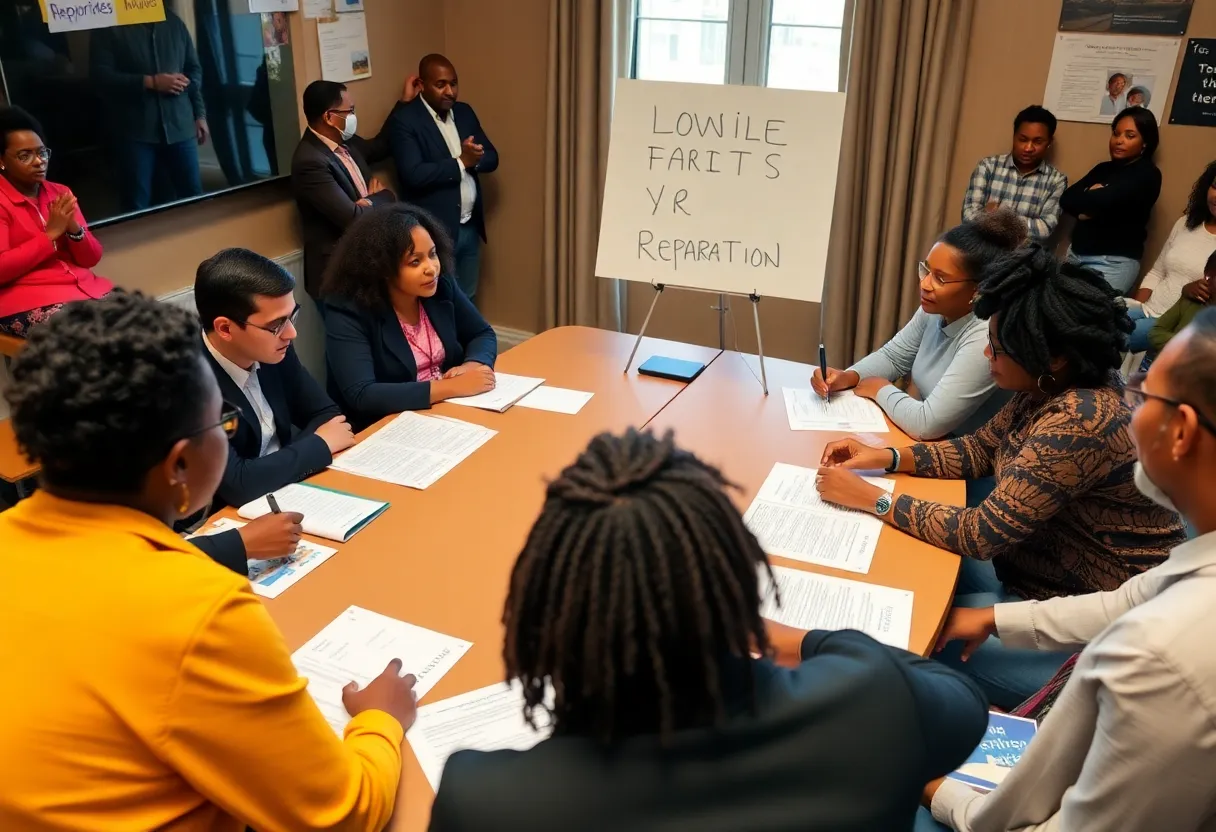
The Asheville-Buncombe Community Reparations Commission presented a comprehensive report to the Buncombe County government intended to address the enduring harms caused by systemic racism. The proposed recommendations include establishing a Black wealth-building fund, creating community land trusts, expanding access to culturally responsive healthcare, reimagining school curricula to reflect Black history, transforming public safety systems, and setting up a permanent reparations oversight body for accountability.
In its letter, the DOJ stated that if the county proceeds with these proposals, the Civil Rights Division will monitor the actions closely, indicating a strong federal interest in the implications these initiatives may have on civil rights laws.
Former chair of the Reparations Commission, Dwight Mullen, expressed concern over the disparities in resources between local governments and federal entities in potential legal challenges. He criticized the Trump administration’s previous stance on reparations, viewing it as encapsulating a belief in what he termed “reverse racism.”
The reparations program in Buncombe County and Asheville is viewed as a significant step within the reparative justice movement, with the county allocating $2.9 million to implement the commission’s recommendations. Some of the proposals include offering affordable housing exclusively for Black residents and mandating diversity and inclusion training for government managers.
The commission’s final list of recommended actions is the result of five years of collaborative efforts by community volunteers. As discussions on reparations gain traction across multiple cities and states in the United States, Buncombe County is seen as a bellwether for such programs.
Additional context includes the demographic makeup of the Asheville and Buncombe County area, which is predominantly white, with approximately 81 percent of the population identifying as such according to the U.S. Census Bureau. Furthermore, recent challenges, such as damages caused by Hurricane Helene in 2024, have placed added financial and infrastructural strains on the region.
In light of the national discourse around reparations, comparisons have been highlighted regarding the funding for reparations for Black Americans versus proposed compensation for individuals involved in the January 6 Capitol insurrection. Senator Cory Booker has remarked on the necessity of recognizing and tackling America’s historical injustices and racial disparities.
Summary of the Proposed Recommendations
- Black wealth-building fund: To support financial empowerment within the Black community.
- Community land trusts: To safeguard affordable housing for Black residents.
- Culturally responsive healthcare: To improve healthcare access and quality for marginalized groups.
- Educational curriculum overhaul: To ensure Black history is taught comprehensively in schools.
- Public safety reform: To rethink safety structures for better community engagement.
- Reparations oversight body: To maintain accountability in the implementation of these initiatives.
Key Facts and Figures
| Feature | Details |
|---|---|
| DOJ Investigation Warning | Sent on September 4, 2025 |
| Funding Allocated | $2.9 million from Buncombe County |
| Predominant Race | 81% of the population is white |
| Years of Effort | Five years by community volunteers |
| DOJ Monitoring | Through the Civil Rights Division |
FAQ Section
What is the purpose of the reparations program in Buncombe County?
The reparations program aims to address the ongoing impact of systemic racism by proposing various initiatives to support the Black community.
What concerns did the DOJ raise in their letter?
The DOJ is concerned that the proposed reparations actions may violate federal civil rights laws, specifically the Fair Housing Act and the Equal Protection Clause of the Fourteenth Amendment.
What are some key recommendations from the Asheville-Buncombe Community Reparations Commission?
Key recommendations include establishing a Black wealth-building fund, creating community land trusts, and reforming public safety systems.
How has the funding for this program been allocated?
Buncombe County has allocated $2.9 million to implement the recommendations outlined by the Reparations Commission.
How does Buncombe County’s demographic make-up affect the program?
The area is predominantly white, with 81 percent of the population identified as such, which could impact community reception and the program’s implementation.
Deeper Dive: News & Info About This Topic
HERE Resources
Students in Western North Carolina Return to School
Asheville Hosts Back-to-School Family Fun Day
Asheville Hosts Free Back-to-School Festival for Families
Community Rallies to Distribute Backpacks in Asheville
Asheville Students Prepare for School Year with Safety Measures
Back-to-School Preparations in Asheville
Asheville Families Prepare for Back-to-School Activities
NCEI Prepares for 2025 Hurricane Season in Asheville
Asheville Anticipates Record Travel This Memorial Day Weekend
West Asheville Police Operation Leads to Three Arrests
Additional Resources
- WLOS: Buncombe County Board Reviews Reparations Report
- Black Enterprise: DOJ Threatens Investigation into NC County Reparations
- WLOS: Civil Rights Division Race Asheville Buncombe County Commission
- New York Sun: Justice Department Threatens to Investigate Unlawful Reparations Program
- WLOS: DOJ Community Reparations Commission Report
- Wikipedia: Reparations for Slavery
- Google Search: Reparations Programs


Author: STAFF HERE ASHEVILLE WRITER
The ASHEVILLE STAFF WRITER represents the experienced team at HEREAsheville.com, your go-to source for actionable local news and information in Asheville, Buncombe County, and beyond. Specializing in "news you can use," we cover essential topics like product reviews for personal and business needs, local business directories, politics, real estate trends, neighborhood insights, and state news affecting the area—with deep expertise drawn from years of dedicated reporting and strong community input, including local press releases and business updates. We deliver top reporting on high-value events such as the Asheville Bread Festival, LEAF Festival, and mountain sports tournaments at Biltmore Estate. Our coverage extends to key organizations like the Asheville Area Chamber of Commerce and Explore Asheville Convention & Visitors Bureau, plus leading businesses in hospitality and brewing that power the local economy such as the Biltmore Estate and Sierra Nevada Brewing Company. As part of the broader HERE network, including HERECharlotte.com, HEREGreensboro.com, HERERaleigh.com, and HEREOBX.com, we provide comprehensive, credible insights into North Carolina's dynamic landscape.