
Asheville, North Carolina, September 5, 2025
News Summary
Asheville, North Carolina, is grappling with the ongoing fallout from Hurricane Helene, prompting state leaders to demand $11.5 billion in federal funding for recovery. Governor Josh Stein highlights the disparity in federal aid, with North Carolina receiving just $1.61 billion against estimated damages of $60 billion. Local businesses and residents are facing a slow recovery, with applications for demolition permits lagging and additional weather challenges compounding the situation. State officials are advocating for better federal support to expedite recovery efforts and prepare for future disasters.
Asheville, North Carolina – State leaders in western North Carolina are voicing urgent pleas for increased federal funding ahead of the one-year anniversary of Hurricane Helene. The ongoing recovery efforts from the devastating storm have faced delays, with many local businesses and residents still grappling with significant financial difficulties.
North Carolina Governor Josh Stein has formally requested $11.5 billion in supplemental disaster appropriations to assist with the recovery, emphasizing that the federal support thus far has not matched that provided to other states following similar disasters. The federal government has allocated only $1.61 billion to North Carolina as of June 30, 2025, in stark contrast to the estimated $60 billion in damages resulting from Hurricane Helene.
The situation has drawn criticism from multiple state representatives, who argue that the federal aid provided is insufficient. Representative Lindsey Prather has condemned the federal response, drawing attention to the inadequate funding compared to that received by states affected by prior hurricanes, such as Hurricane Sandy and Hurricane Katrina. Meanwhile, the Trump administration has asserted that North Carolina’s federal cost-sharing response is one of the most generous in history.
Despite this contention, the state has only recovered 6% of its disaster-related costs from the federal government, leading to calls for a more equitable funding model. Representative Eric Ager has noted that in the case of previous major storms, such as Hurricane Matthew, states received upwards of 53% reimbursement, while North Carolina’s recovery rate remains alarmingly low.
As recovery efforts continue, Congressman Chuck Edwards has pointed out that North Carolina has allocated $2.9 billion to aid recovery efforts, although the state is facing a pressing need for additional funding. With many local businesses still suffering from the prolonged impacts of unemployment and recurrent drought conditions following the hurricane, slow rebuilding progress remains a significant concern.
Local officials report that many applications for demolition permits are moving at a sluggish pace, with only 300 applications submitted and 100 approved so far. This illustrates the difficulties many families are experiencing in their recovery efforts, including individuals like James and his wife, who continue to reside in a camper following damage to their home caused by landslides during the hurricane.
Buncombe County alone awaits nearly $20 million requested for rebuilding initiatives that have yet to be received. State leaders attribute much of the slow recovery progress to cumbersome federal bureaucratic processes and staffing shortages, which have hindered efficient fund distribution.
Ongoing weather events, including Tropical Storm Chantal and Hurricane Erin, exacerbate the recovery challenges, putting further strain on North Carolina’s already dwindled disaster savings fund, which has fallen from $700 million to $110 million due to delayed federal assistance and a lack of a new state budget.
Amid these challenges, Governor Stein has joined forces with 19 other states in a lawsuit against FEMA, contesting the cancellation of a grant program that previously helped protect critical state infrastructure. As recovery efforts stall, local officials stress the importance of enhanced coordination and federal support to ensure that North Carolina can effectively respond to future disasters.
Background Context
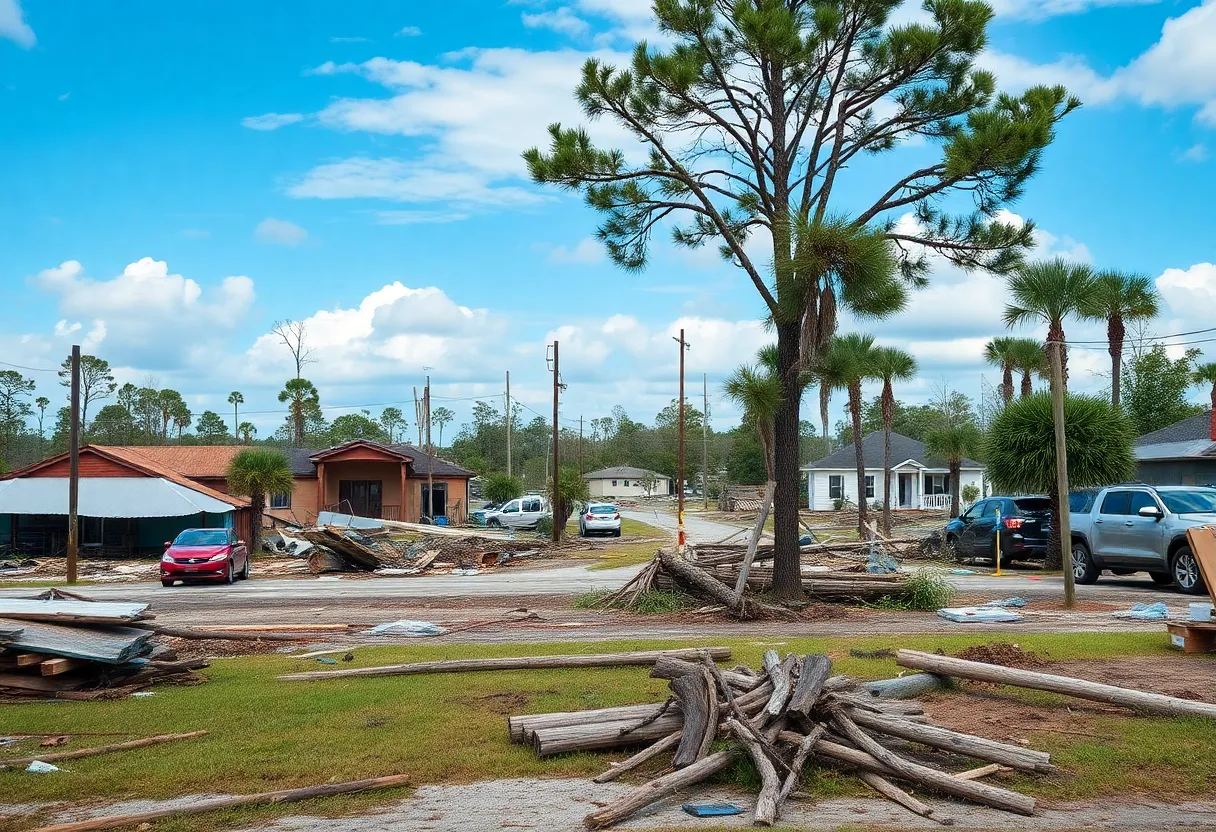
Hurricane Helene struck North Carolina last year, resulting in extensive destruction across the region. Approximately 12,000 properties were either damaged or destroyed, prompting a lengthy and challenging recovery process as communities seek to rebuild. Delays in federal assistance, bureaucratic impediments, and diminishing state disaster funds have all contributed to the difficulties faced by local governments and residents.
Key Features of the Recovery Efforts
- Requested federal funding: $11.5 billion
- Total federal funding received: $1.61 billion
- Estimated damages from Hurricane Helene: $60 billion
- Percentage of disaster costs reimbursed by federal government: 6%
- Number of damaged properties: 12,000
- Local recovery funding allocated: $2.9 billion
FAQ Section
What prompted the call for increased federal aid in North Carolina?
State leaders are demanding increased federal aid due to insufficient funding that has been received for recovery after Hurricane Helene, which caused significant damage across the region.
How much federal funding has North Carolina received for Hurricane Helene?
As of June 30, 2025, North Carolina has received a total of $1.61 billion in federal funding, which is significantly lower than the estimated $60 billion in damages.
What are the ongoing challenges faced by residents in recovery?
Many residents and businesses are facing long recovery times, with issues such as slow permit approvals, limited funding for rebuilding, and compounded hardships from additional storms severely affecting their ability to recover.
What actions are state leaders taking to address these challenges?
State leaders, including Governor Josh Stein, are advocating for additional federal funding, challenging the adequacy of current support, and are involved in legal actions against FEMA regarding grant cancellations that affect infrastructure protection.
Deeper Dive: News & Info About This Topic
HERE Resources
Buncombe County Commemorates One Year Since Hurricane Helene
Asheville Opens Applications for Event Support Grant
Restoration of Recovery Funding for Hurricane Helene Victims
Asheville Woman Faces Eviction Amid FEMA Assistance Shortfalls
Governor Stein Announces Recipients of North Carolina Award
Hurricane Francine Disrupts High School Football in North Carolina
ICE Arrests Man Outside Asheville Courthouse
Hurricane Helene Causes Major Flooding in Asheville
Hurricane Helene Devastates Asheville and Surrounding Areas
Western NC Leaders Share Flood Recovery Strategies with Texas
Additional Resources
- WCNC: Hurricane Helene Aftermath in Buncombe County
- Elon News Network: Federal Disaster Relief in North Carolina
- WJHL: Appalachia Service Project Celebrates Post-Helene Home Dedication
- WRAL: Rebuilding After Helene in Western NC
- 828 News Now: Buncombe County Officials Reflect on Helene Recovery
- Wikipedia: Hurricane Helene
- Google Search: Hurricane Helene North Carolina news
- Google Scholar: Hurricane Helene impacts recovery
- Google News: Hurricane Helene 2025


Author: STAFF HERE ASHEVILLE WRITER
The ASHEVILLE STAFF WRITER represents the experienced team at HEREAsheville.com, your go-to source for actionable local news and information in Asheville, Buncombe County, and beyond. Specializing in "news you can use," we cover essential topics like product reviews for personal and business needs, local business directories, politics, real estate trends, neighborhood insights, and state news affecting the area—with deep expertise drawn from years of dedicated reporting and strong community input, including local press releases and business updates. We deliver top reporting on high-value events such as the Asheville Bread Festival, LEAF Festival, and mountain sports tournaments at Biltmore Estate. Our coverage extends to key organizations like the Asheville Area Chamber of Commerce and Explore Asheville Convention & Visitors Bureau, plus leading businesses in hospitality and brewing that power the local economy such as the Biltmore Estate and Sierra Nevada Brewing Company. As part of the broader HERE network, including HERECharlotte.com, HEREGreensboro.com, HERERaleigh.com, and HEREOBX.com, we provide comprehensive, credible insights into North Carolina's dynamic landscape.